


Dance conventions push a dancer’s wardrobe harder than almost any other training environment. Back-to-back classes across multiple disciplines, minimal time to change, and hours of continuous movement mean dance convention outfits need to do far more than simply look good in a room full of talented dancers. They need to perform physically across an entire day, sometimes multiple days, without sacrificing the visual presence that helps a dancer stand out to faculty and judges.
Layering strategy is the single most important consideration for convention wear, since dancers often move between styles ranging from ballet to hip hop within a single day, each with different visual and functional expectations. A strong foundation piece, typically a well-fitted leotard or bralette top, paired with adjustable outer layers like a cropped jacket, mesh top, or lightweight hoodie, allows dancers to adapt quickly between classes without needing full outfit changes in limited break time. This layering approach also helps regulate temperature across long convention days, since studios and convention centers vary considerably in how warm or cool they keep rehearsal spaces.
Fabric performance matters more at a convention than in a typical single class, given the sheer duration of continuous wear and movement involved. Moisture-wicking, four-way stretch blends become especially important here, since dancers need pieces that stay comfortable and maintain their shape through six, eight, or more hours of movement without becoming visibly worn or losing structure by the final class of the day. Lower quality fabrics that perform adequately for a single hour-long class often show real limitations under the extended demands of a full convention schedule.
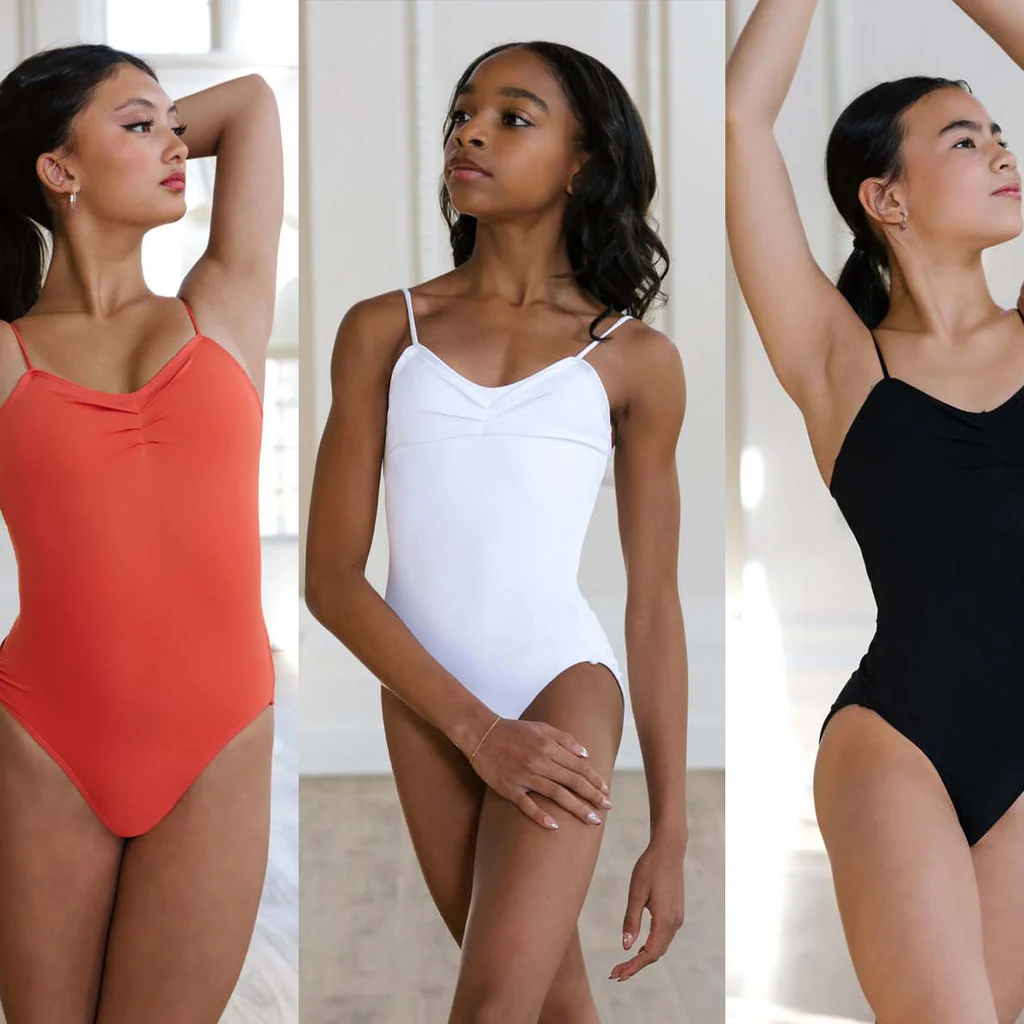
Color and styling choices carry genuine strategic weight in a convention setting, where judges and faculty are often observing large groups of dancers simultaneously. Bold, saturated colors and clean silhouettes tend to draw the eye more effectively in a crowded room than muted tones or overly busy patterns, though this should never come at the expense of a piece’s functional performance. The most effective convention outfits balance visual impact with the practical demands of full-range movement, since an outfit that photographs well but restricts a dancer’s technique ultimately works against them rather than for them.
Footwear and accessory coordination deserve equal planning attention, since conventions often move quickly between styles that call for different shoe types, from ballet slippers to jazz shoes to sneakers for hip hop sections. Building an outfit around pieces that pair easily across these different footwear needs, rather than planning each look in isolation, saves valuable time during quick transitions between rooms and classes.
For studios coordinating group convention attendance, building a flexible outfit strategy across an entire team introduces additional considerations. A cohesive color palette or matching key pieces can help a studio’s dancers stand out as a group while still allowing individual variation in fit and styling to suit each dancer’s body and personal comfort. This approach tends to photograph and perform better than requiring an identical outfit across dancers with different body types, since fit consistency matters more for both function and visual polish than exact uniformity.
Packing strategy ties directly into all of these considerations, since convention days rarely allow time for outfit indecision between classes. Dancers who plan a rotation of interchangeable pieces, built around versatile foundational layers, tend to move through a demanding schedule with far less stress than those improvising outfit choices between sessions.
Ultimately, the strongest convention outfits are the ones built to perform physically across a demanding schedule while still making a visual impression that helps a dancer stand out. Dancers, coaches, and studios preparing for convention season can find styling guidance and a full range of performance-ready pieces at Tiger Friday, where function and visual polish are treated as equally essential to convention success.